
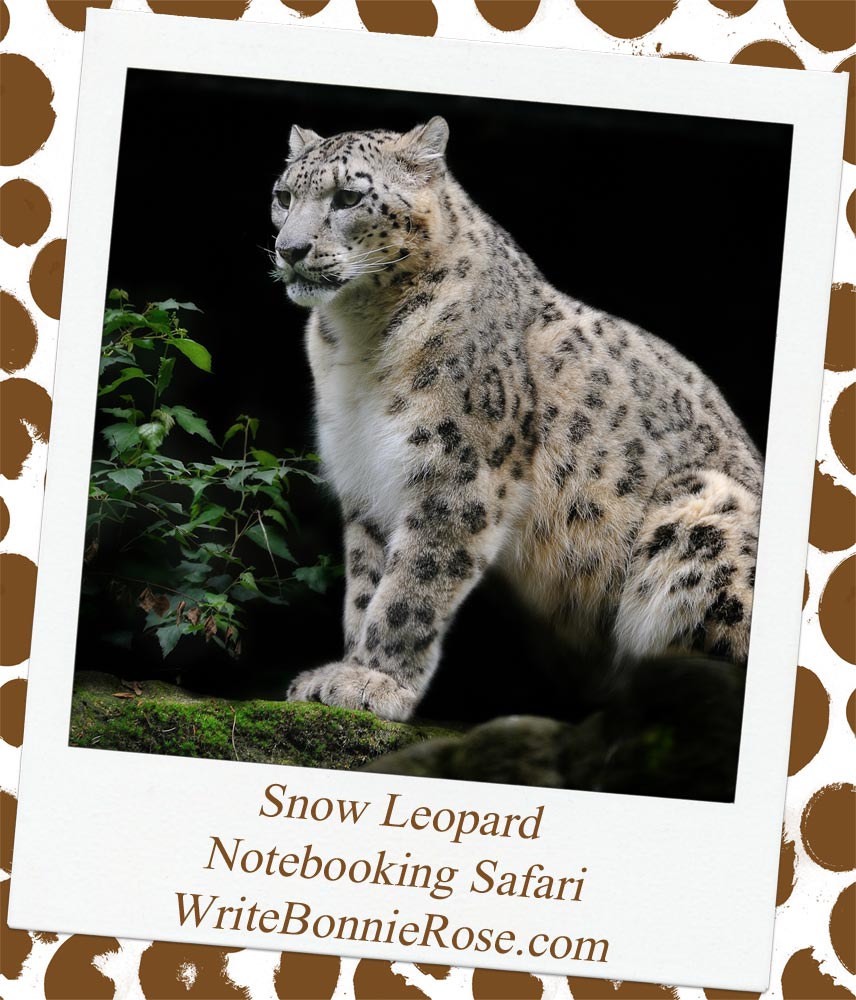
 Our next stop in our notebooking safari across Asia takes us to Kazakhstan. If you’re new to the notebooking safari, visit our first stop here.
***
We’re going to have to watch our next animal from a safe distance. We’ll need the binoculars for sure. I want you to see an endangered animal called the snow leopard. Their numbers are dwindling, and they are hunted for their fur and because they sometimes kill farmers’ livestock.
Come with me and we’ll see if we can spot one. They have long, thick fur that ranges from white to a smoky-grey color and is covered with black spots. God gave it short front limbs and long hind limbs to help it climb the mountains where it likes to roam. He gave it lots of ways to keep warm, too. Not only does it have thick fur, but it has a long tail—almost a meter long—that it can wrap around its body and face like a scarf!
There—look high up on that mountainside. Do you see it? You’ll have to look closely. The black spots on its fur make it blend into the rocks. We don’t dare get any closer. There is something else special about the snow leopard—it can jump as far as fifty feet (15.25 meters)!
To see pictures of snow leopards and try a special online jigsaw puzzle, click here.
Using the information on this page, answer the following questions:
True or False:
1. There are more than 10,000 snow leopards living in the wild.
2. Snow leopards usually have 2 or 3 cubs at one time.
3. Snow leopards like to hunt around noon.
Research challenge: Another feature God gave the snow leopard that helps it keep warm is a specially-designed nasal cavity. What is special or different about it, and how does that help the snow leopard keep warm?
For a free downloadable copy of the entire Asian animals notebooking safari series (31 units total) plus a notebooking page for each one, sign up below.
Leave a Reply